

Architecture & Design · 4 min read
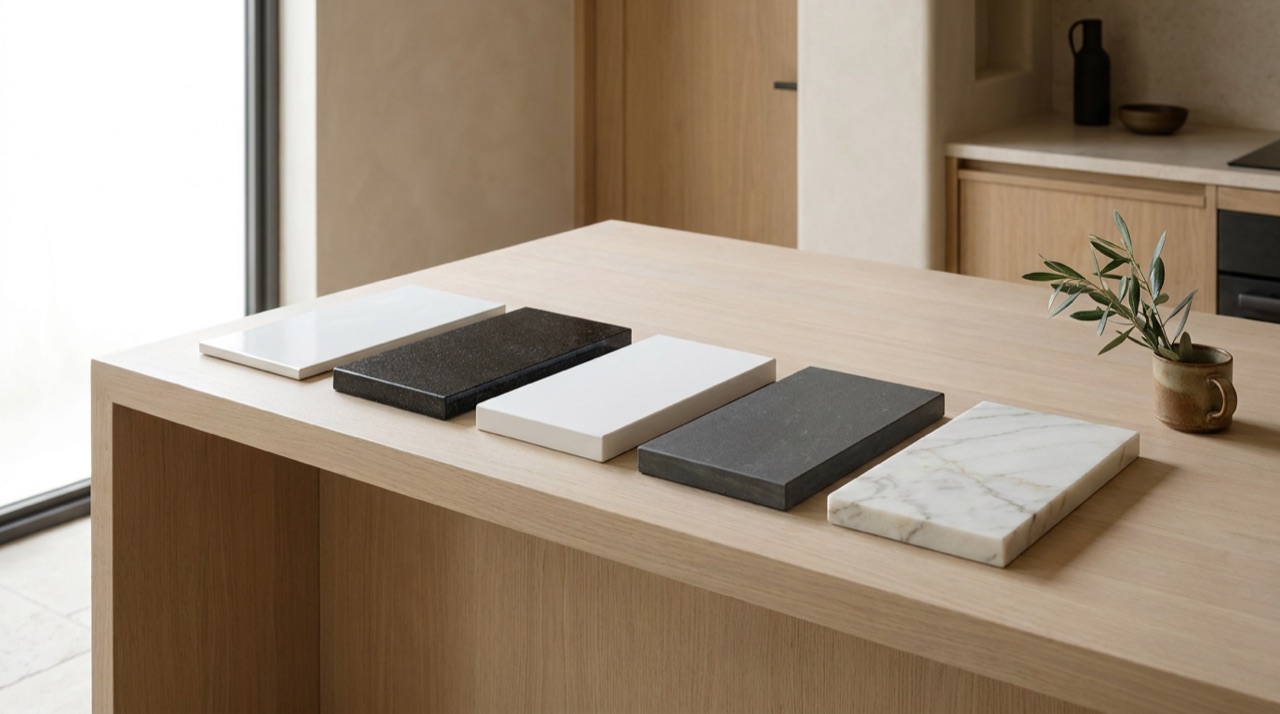
Kitchen countertops ranked: quartzite, quartz, granite and more
Five countertop materials I see in Miami kitchens, from the one I'd skip to my favorite: how porcelain, granite, quartz, sintered stone and quartzite handle heat, knives and spills.

By Lilian Yedid
On this page
Key takeaways
- My ranking, from the one I'd skip to my favorite: porcelain slab, dark granite, quartz, sintered stone and quartzite.
- Quartz and quartzite are different materials: quartz is engineered with resin, quartzite is a natural stone.
- Quartz doesn't need sealing but doesn't like hot pans; quartzite handles heat, and whether it needs sealing depends on the slab.
- No countertop is maintenance free, and none guarantees a higher sale price. Choose the one that fits how you cook.
Every kitchen I walk through in Miami has a countertop that tells me something about how the house was finished. Here are five materials, ranked from the one I would skip to my favorite, and the reason behind each place.
How did I rank them?
I looked at what a countertop goes through in a kitchen that is really used, especially an open kitchen that is also the center of the living area: hot pans, knives, lemon and wine, and the way the stone looks every day, not only in photos.
| Material | Heat | Edges and scratches | Stains | Care |
|---|---|---|---|---|
| Porcelain slab | Handles it well | Thin edges can chip | Resists well | Low |
| Dark granite | Handles it well | Hard to scratch | Resists well | Depends on the stone |
| Quartz | Use a trivet | Resists well | Resists well | No sealing |
| Sintered stone | Handles it well | Very hard | Very resistant | Low |
| Quartzite | Handles it well | Very hard | Depends on the slab | Sealer if the slab needs it |
This is a general guide. Every slab is different, so ask your fabricator about the specific one you are choosing.
Number five: why would I skip a porcelain slab?
Heat doesn't bother porcelain, and it resists stains. My problem is the edges. Porcelain slabs are thin, and a hard knock on an edge can chip it. In many slabs the pattern is printed on the surface, so a chip can show a different color underneath. In a kitchen that gets used every day, that is the place I see the wear first.
Number four: why is dark granite the best value?
Granite is a natural stone that handles heat and is hard to scratch. Darker granites usually hide marks and stains well, and they have been in kitchens for decades, so good fabricators know them. It is the material I point to when someone wants something durable without paying for the top of the range. Whether it needs a sealer depends on the stone, so ask.
Number three: what should you know about quartz?
Quartz gives you clean, solid, uniform colors, the kind that are hard to find in natural stone. It is engineered: mostly ground quartz bound with resin. That makes it nonporous, so it doesn't need sealing, and it resists stains.
The resin is also its weak point. Manufacturers advise against putting hot pans directly on it, because heat can discolor or damage the surface. Keep trivets close, and check the manufacturer's rating before you use it in an outdoor kitchen. Consumer Reports has a clear comparison if you are torn between quartz and quartzite.
Number two: why do I call sintered stone the tank?
Because almost nothing marks it. Sintered stone is made from natural minerals fused at very high heat, and the result is a dense slab that resists heat, knives and spills. If you cook a lot and don't want to think about your countertop, this is a serious option. It asks for an experienced fabricator, because it is less forgiving to cut and install.
Number one: why is quartzite my favorite?
Quartzite is a natural stone with the look and movement of marble and a toughness closer to granite. Every slab is one of a kind, which is exactly what I like in a house with real architecture: the kitchen doesn't look like a catalog.
It is still natural stone. According to the Natural Stone Institute, whether quartzite needs a sealer depends on how porous the slab is, so ask your fabricator to test yours. And make sure what you are buying is really quartzite: some stones sold under that name behave more like marble, which is softer. A quick scratch test on a sample tells you a lot.
When I show a house, I explain the materials, not just the adjectives. I'm not a contractor or an inspector, so for the condition of a specific kitchen I always recommend an independent inspection. If you are reading the whole house, also see why Miami homes grow up, not down and, if you are looking at land, what to do with a landlocked lot.
The ranking started as a short video on my Instagram. Which one is in your kitchen? Tell me.
Questions about kitchen countertops
Is quartz or quartzite better for a kitchen?
It depends on how you cook. Quartz is engineered, nonporous and needs no sealing, but its resin doesn't like heat, so hot pans always go on a trivet. Quartzite is a natural stone, handles heat well and has the movement of marble, and depending on the slab it may need a sealer. If you cook a lot and want a natural look, quartzite is my favorite. If you want solid, uniform colors and simple care, quartz is a good choice. Here is the full ranking.
Can you put a hot pan on quartz?
I wouldn't. Quartz countertops are made with a resin binder, and manufacturers advise against hot pans directly on the surface because heat can discolor or damage it. Keep trivets next to the cooktop and the oven. If you want a surface where a hot pan is less of a worry, look at sintered stone or quartzite.
Does quartzite need to be sealed?
It depends on the stone. According to the Natural Stone Institute, some quartzites are dense enough not to need it and more porous varieties benefit from a sealer, which increases stain resistance. Ask your fabricator to test your slab, and clean spills promptly either way.
What is sintered stone?
Sintered stone is made from natural minerals compressed and fused at very high heat into dense slabs. In a kitchen that means strong resistance to heat, scratches and stains. It is less forgiving to cut and install, so choose a fabricator who has worked with it before.
Which countertop adds the most value to a home?
I can't promise that any countertop raises what a home is worth, and I would be careful with anyone who does. What I can tell you is what buyers notice when they walk a kitchen: a material that suits the house and is in good condition. Choose for the way you live, and read the rest of the house with the same care, starting with why Miami homes grow up, not down.
- kitchen countertops
- quartzite
- quartz vs quartzite
- kitchen design
General information only, not legal, tax, engineering or inspection advice. Rules change and every property is different: confirm the details with a licensed attorney, inspector or engineer before you decide. Lilian Yedid, Realtor with ONE Sotheby's International Realty.
Keep reading
All notes →
Architecture & Design
Why Miami homes don't have basements (and London's do)
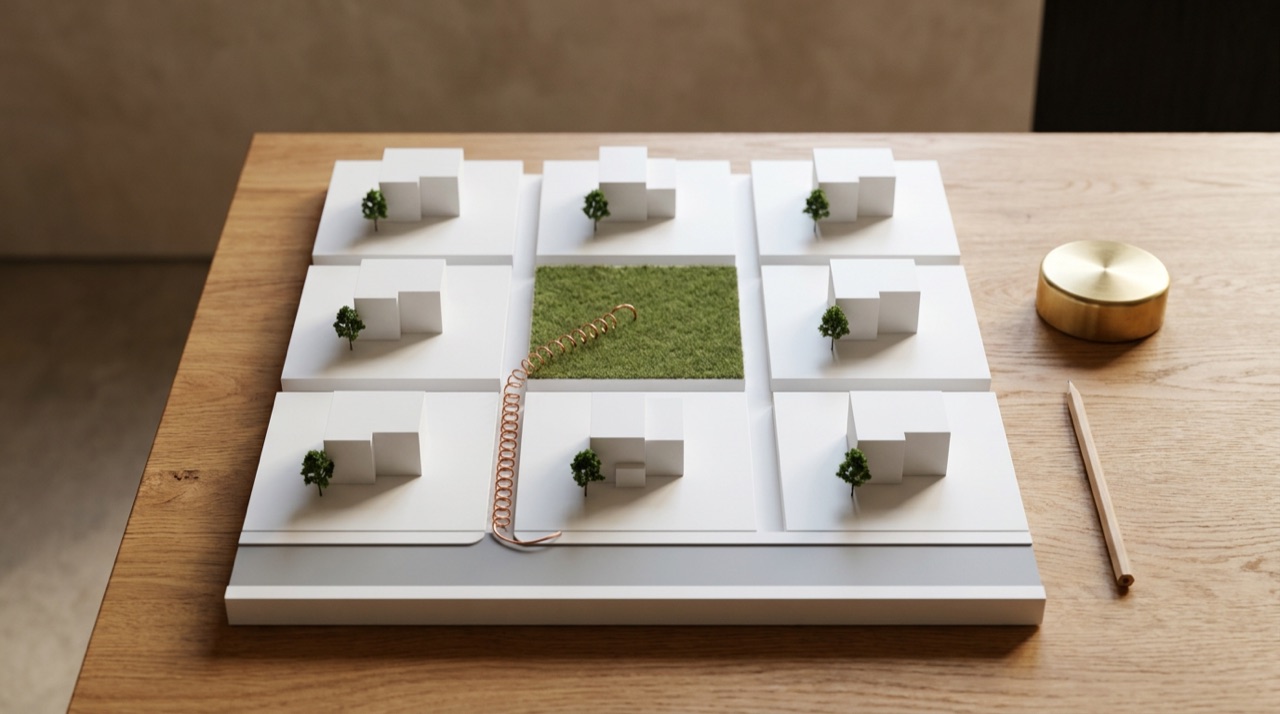
In London, people dig under the garden. In Miami, the aquifer sits right under the lawn, so a well-designed house grows up instead. Here is what that changes when you read a home.
· 4 min read
Buying Guides
Buying a landlocked lot in Florida: three ways to make it work
A lot with no road and no legal way in sells cheap for a reason. What landlocked means, three ways buyers make one work, and what to check with an attorney before you close.
· 4 min read